What the switch actually does
When utility power drops, the automatic transfer switch notices within seconds and signals the generator to start. Once the generator is up to speed, the switch disconnects your house from NV Energy's lines and connects it to the generator. When utility power is steady again, it switches back and lets the generator cool down and shut off.
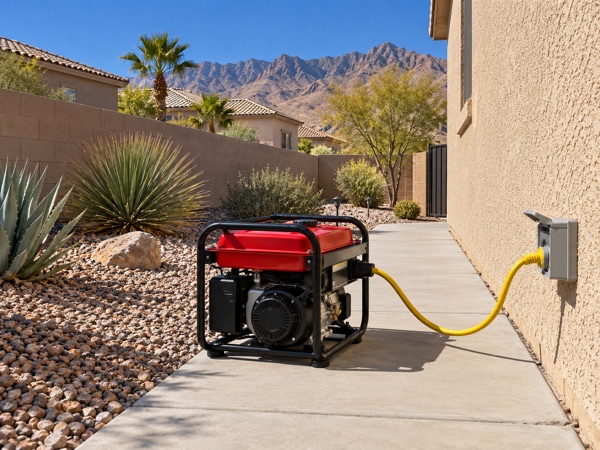
That separation matters. A generator connected to the house without a switch can push power back out onto the street's lines, which is a danger to line crews working on the outage.
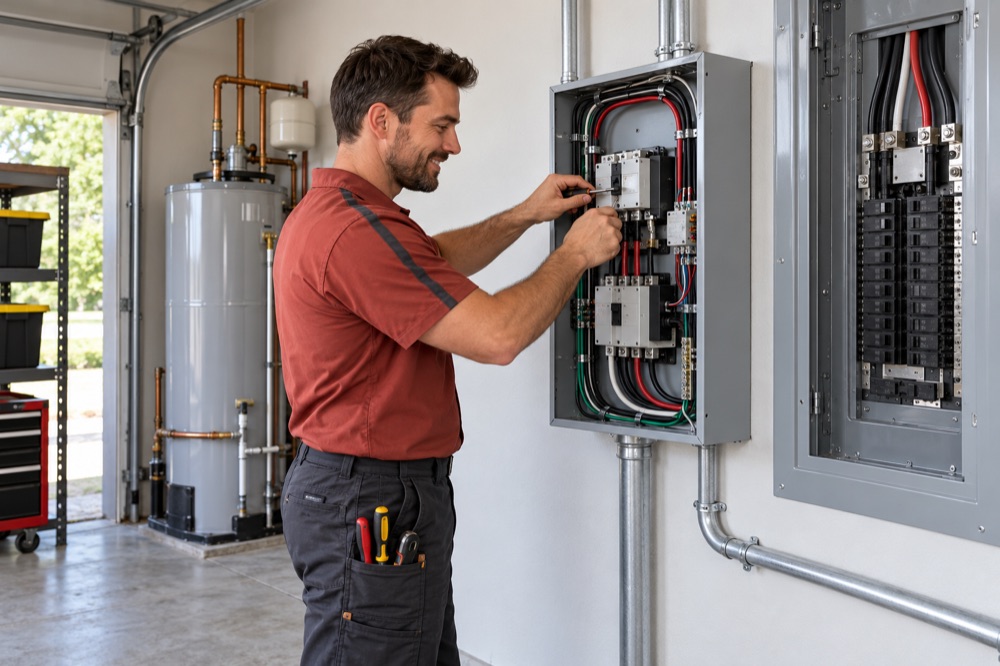 A new switch beside the main panel
Load managers for valley homes
In most valley houses the central air is the biggest load. A load manager wired with the transfer switch can briefly hold off the air conditioner, a water heater or a pool pump when the generator is near its limit, then let it run again. That's often how a mid-size generator handles a house that would otherwise need a much bigger one.
Replacing or repairing a switch
Transfer switches wear too. Contacts pit, relays stick and control boards fail, especially in a hot garage or on an exterior wall that gets afternoon sun. Signs include a generator that runs but the house stays dark, a house that won't go back to utility power, or clicking and switching back and forth.
Most automatic switches are built to talk to the same brand of generator. If you're replacing the generator or the switch on its own, we check compatibility first, so a Generac switch doesn't end up trying to run a Kohler unit.
What it costs
Angi's generator cost guide lists transfer switch repairs at $50 to $150 and a replacement switch at $200 to $400 for the part alone, plus several hours of labor. Those are national figures; we quote after looking at your panel.