The parts of a hookup
An inlet box. A weatherproof outdoor connector mounted on the house wall, usually near the side yard where the generator will sit.
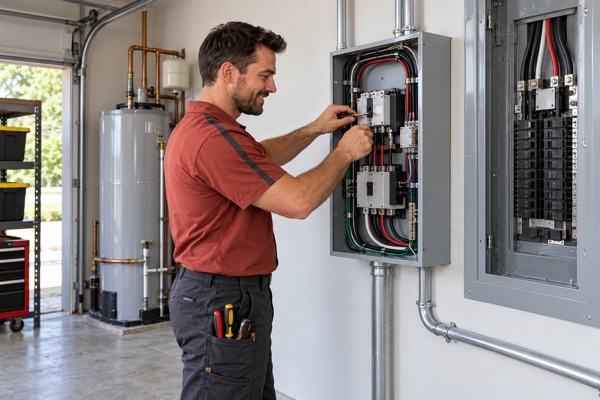
A panel interlock or manual transfer switch. A mechanical part on your main panel that makes it impossible to have the utility main breaker and the generator breaker on at the same time. That keeps power from flowing back out onto NV Energy's lines.
A heavy-duty cord. Sized for the generator's outlet, long enough to keep the generator well away from the house.
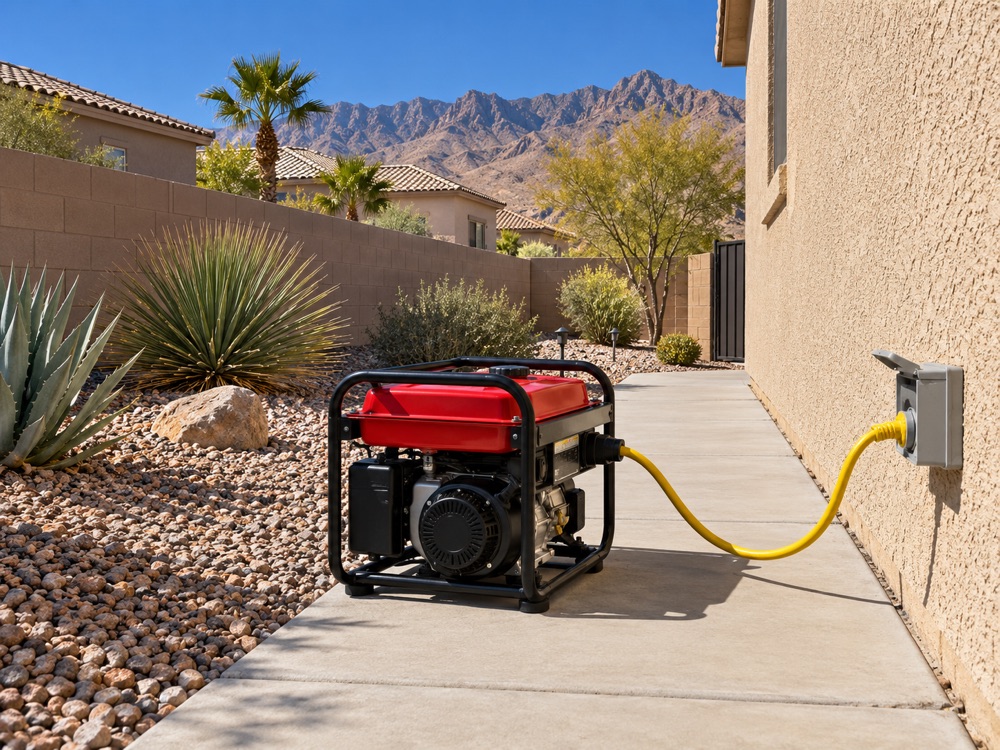 Portable on the side path, cord to the inlet
How you use it in an outage
Set the generator outside, plug in the cord, start it, then switch the main breaker off and the generator breaker on. Turn on the circuits you want, one at a time. When the power comes back, reverse it. We walk through it with you on the day and leave a written card by the panel.
Not with the door open, not for a few minutes. Carbon monoxide builds up fast. Keep the generator outside and away from doors, windows and vents.
Portable or standby?
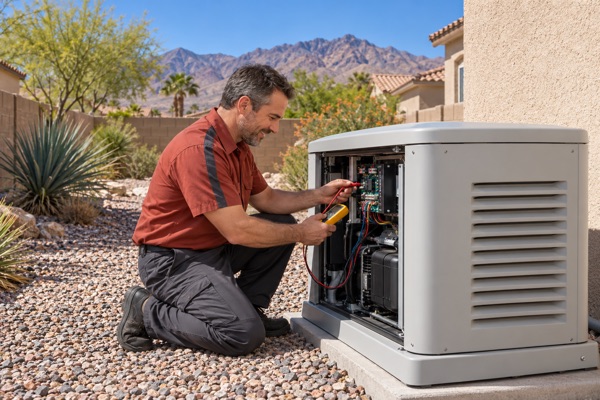
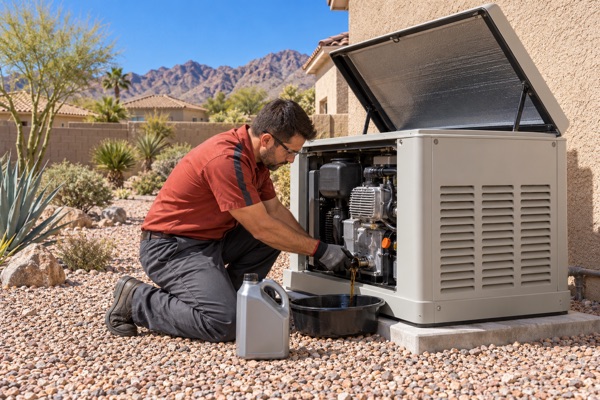
A portable hookup costs far less than a standby system, and it uses equipment you may already own. The trade-off is that someone has to be home to set it up, start it and keep it fueled, and it usually can't run central air. For a house where the air conditioning has to stay on, or where nobody may be home, a standby generator is the better fit.