A town, not a city
Paradise isn't incorporated. It's one of the unincorporated towns of Clark County, so county government rather than a city hall runs local services, even though the mailing addresses say Las Vegas. It takes in the Las Vegas Strip, Harry Reid International Airport and UNLV, and in the blocks around them sits a large stock of single-story homes from the 1970s and 1980s.
The Census Bureau's American Community Survey (2020–2024 estimates) counts about 94,300 housing units in Paradise, about 75,900 of them occupied. Roughly 24,000 were built in the 1970s and another 18,000 in the 1980s, a far older mix than North Las Vegas.
Electric heat and older panels
Paradise is the place on our route where gas and electric heat are closest to even. The same survey counts about 39,200 occupied homes heating with electricity and about 34,000 with utility gas. In an all-electric Paradise house, both the air conditioner and the heat pump or furnace land on the generator, so sizing matters more than usual.
How Paradise homes heat
American Community Survey, 2020–2024 five-year estimates
Utility gas Other fuel
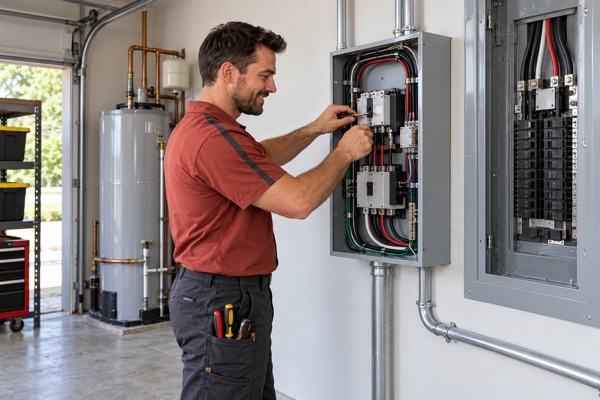
Older homes also tend to have older main panels. Before a transfer switch goes in, we check the panel's condition and space. Sometimes that's a quick look; sometimes the panel needs work first, and we'll tell you before you commit.
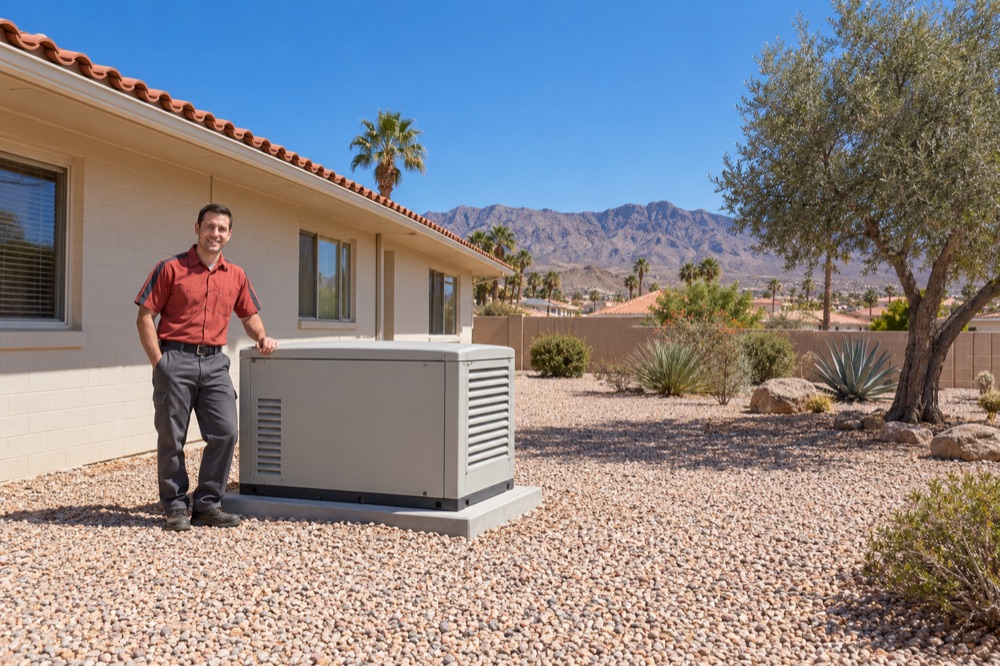 A 1970s ranch with room in the side yard
Getting there from North Las Vegas
From our North Las Vegas base it's about 24 road miles to the middle of Paradise, roughly half an hour depending on the time of day and which way we go around the airport. We plan Paradise visits for mornings when we can, before the afternoon heat and the traffic around the Strip build up.
Gas homes in Paradise are on Southwest Gas, and a standby unit can usually run from the existing meter. All-electric homes can run the same kind of unit on propane.